
Prismatic
Magnifying Readers (PMRs) and Spectacle Miniature Telescopes (SMTs) treat
macular degeneration and other vision loss conditions (low vision). Dr. Randolph Kinkade, a Connecticut
optometrist and founding member of the International Academy of Low Vision
Specialists, understands how to maximize eyesight when there has been permanent
vision loss.
 |
| Dr. Kinkade and Guide for Macular Degeneration Eyeglasses |
Low vision can make daily activities such as reading the
newspaper, writing a check or driving the car difficult or impossible. With low vision, the vision loss cannot be
corrected completely with regular glasses, surgery or medication.
Macular degeneration is the most common cause of low
vision. However, other eye conditions
such as glaucoma, diabetic retinopathy, optic nerve disease, eye injuries and
birth defects can lead to permanent vision loss. This vision loss can be mild to severe.
Low vision means people have to change how they do things. Special low vision glasses (high-power and
telescopic), large print, video magnification and special software are devices
to help with vision loss.
“Magnification is the key to low vision treatment”, said
Dr. Kinkade. “Magnification in the form of glasses, rather than having to hold
a magnifier, is the ideal goal for low vision rehabilitation”.
There are limits to how much effective magnification a
regular pair of glasses can deliver. The
more magnification that is required to read, the closer the reading material
must be held to the glasses.
Prismatic Magnifying Readers offer increased magnification while allowing both eyes to work
better together for additional enhancement.
The vision needs to be relatively equal in both eyes for PMRs to be most
beneficial. These glasses reduce the eye
strain and fatigued often accompanied when reading material must be held
close. Holding reading material close
allows for the extra magnification.


Spectacle Miniature Telescopes (SMTs) offer magnification at a more normal
reading distance. SMTs use 2-3 lenses in
combination to provide the power and increased viewing distance. They can be fit for one or both eyes. They can be helpful for seeing playing cards
on the table, reading piano music, or painting. They can also be useful for
distance magnification for seeing faces, television, and road signs.
“Due to laws of optics and physics and the anatomy of the
eye, as magnification increases the field of view decreases”, said Dr. Kinkade. “When the field of view deceases, less of the
page can be seen at a time. This means
that the patient must learn to scan more across a line of print when reading”.


Proper and enhanced illumination is the other major
assistive treatment for low vision.

“Proper magnification and better illumination is often
the difference between reading and not being able to read with low vision” said
Dr. Kinkade.
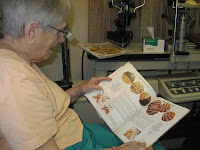
 Free e-book Guide for Macular Degeneration Eyeglasses and additional information is available at LowVisionEyeglasses.com


Contact Dr. Kinkade for a free telephone consultation
to see if you or someone you know is a candidate
for his special glasses.
(800) 756-0766
Cheshire • Danbury • Farmington
Litchfield • Manchester • Norwalk • Waterford


